See the analysis
Linguistic decisions should be open to inspection, correction, and discussion.
Classical languages & independent software
I study classical languages and build tools for close reading. This is the home of STOA, my reading and annotation workspace, and my ongoing reconstruction of the LSJ Greek lexicon.
Greek words. Considered pages. Tools made useful.

01 / Reading & typesetting
Working local versionA workspace for words.
Built for close reading.
STOA is my workspace for reading, annotating, and typesetting classical texts. It brings original texts, word glosses, dictionary forms, and editable annotations into a considered page layout.
The screenshots below show STOA 5.9.7 running locally in its web interface, with the bundled Ancient Greek sample from Aristotle’s Politics I.2 and an actual PDF export.
Ask me about STOAWork with tokens, dictionary forms, morphology, and syntax in editable, structured records.
Connect close reading with dictionary lookup and linguistic metadata.
Review and refine linguistic analysis while retaining control of the final annotation.
Create clear, publication-quality output for teaching, study, and scholarly work.
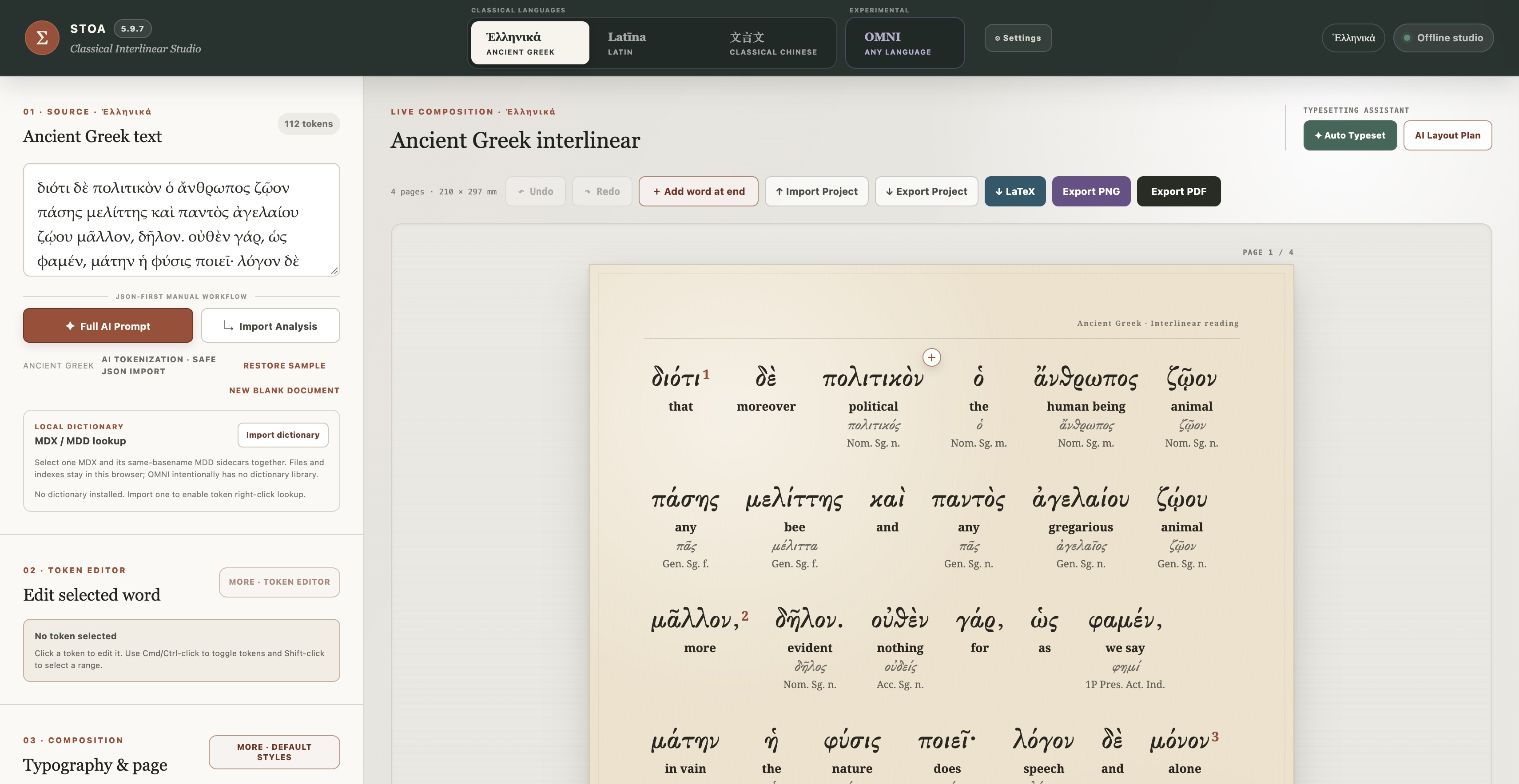 View full resolution
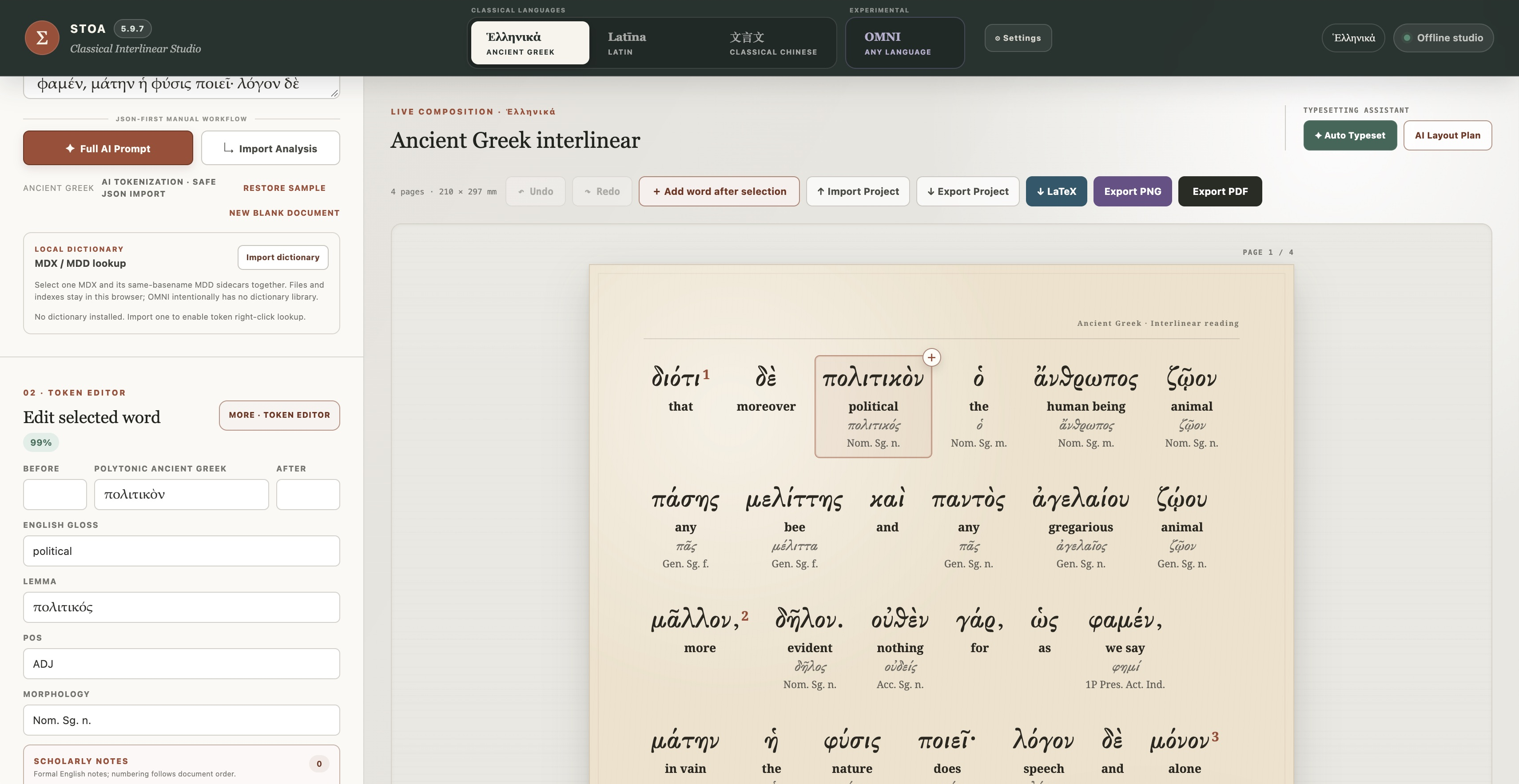 View full resolution
The composition and the selected word stay together, so an editorial decision can be checked against its place in the text.
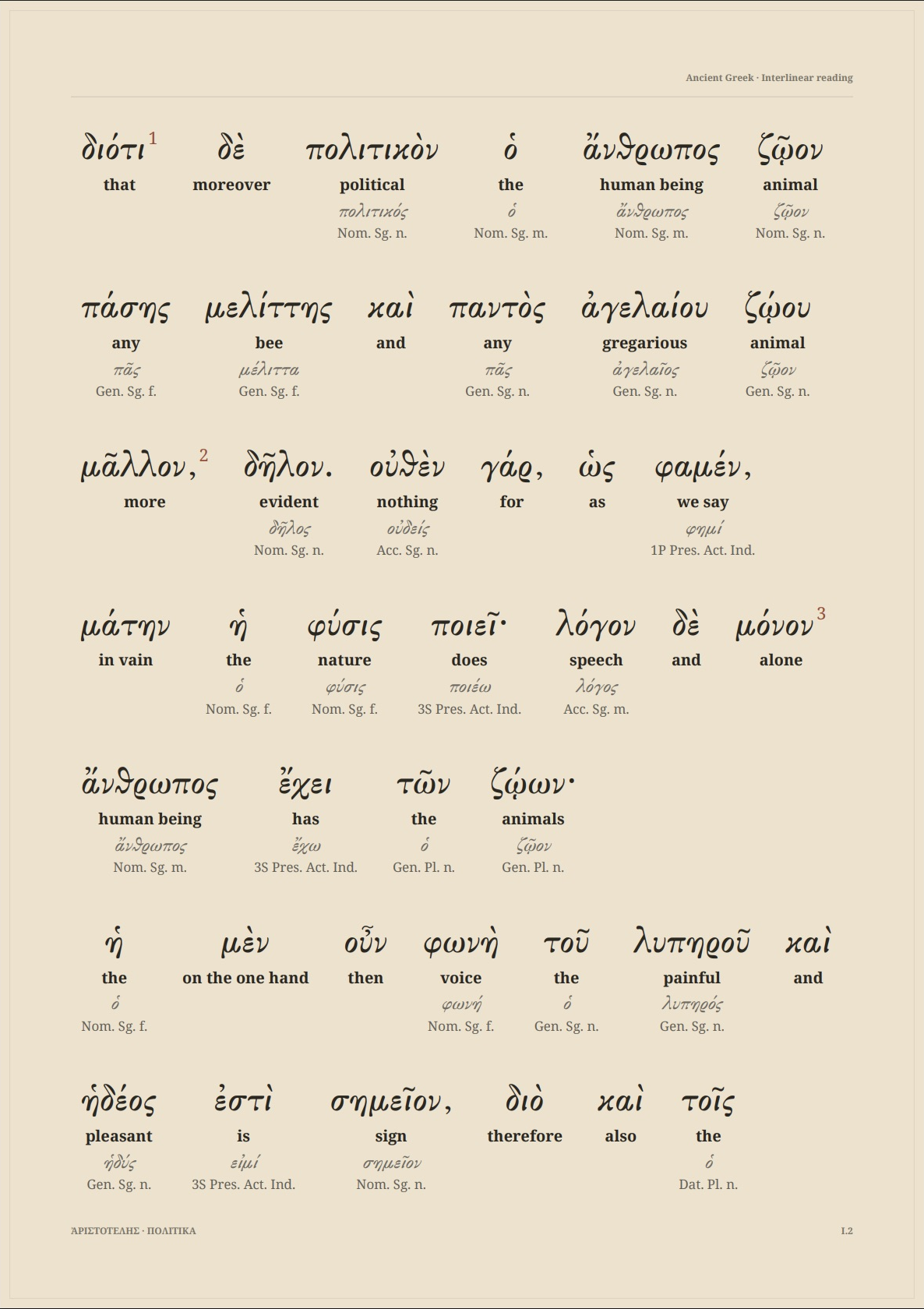 View full resolution
Captured from the working application on 15 October 2026. Sample annotations are shown as stored in the project.
02 / Lexicography & structure
Reconstruction in progressA great reference.
A clearer path through it.
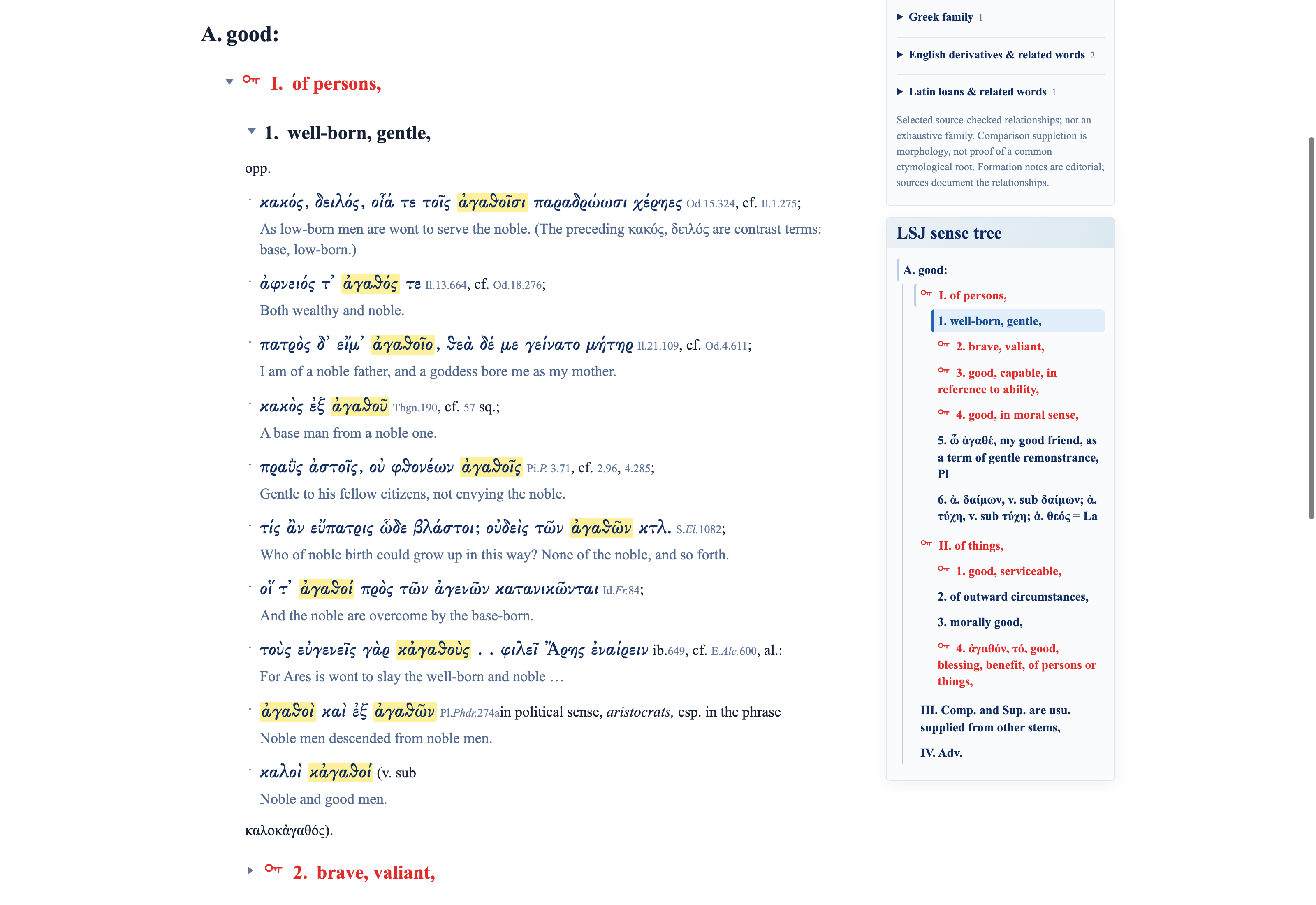
I am restructuring the Liddell–Scott–Jones Greek–English Lexicon for learners and close readers of Ancient Greek. The project is actively in progress, with a focus on clearer sense hierarchies, readable examples, translations, and consistent typography.
My aim is to make a demanding reference work easier to use while keeping the source material and editorial additions distinguishable.
Discuss the lexicon projectMake the relationship between major meanings and sub-senses easier to follow.
Present examples, translations, and citations with a consistent visual structure.
Distinguish the original lexicographic material from explanations added for the learner.
Inside the reconstruction
ἀγαθός · Edited preview awaiting review
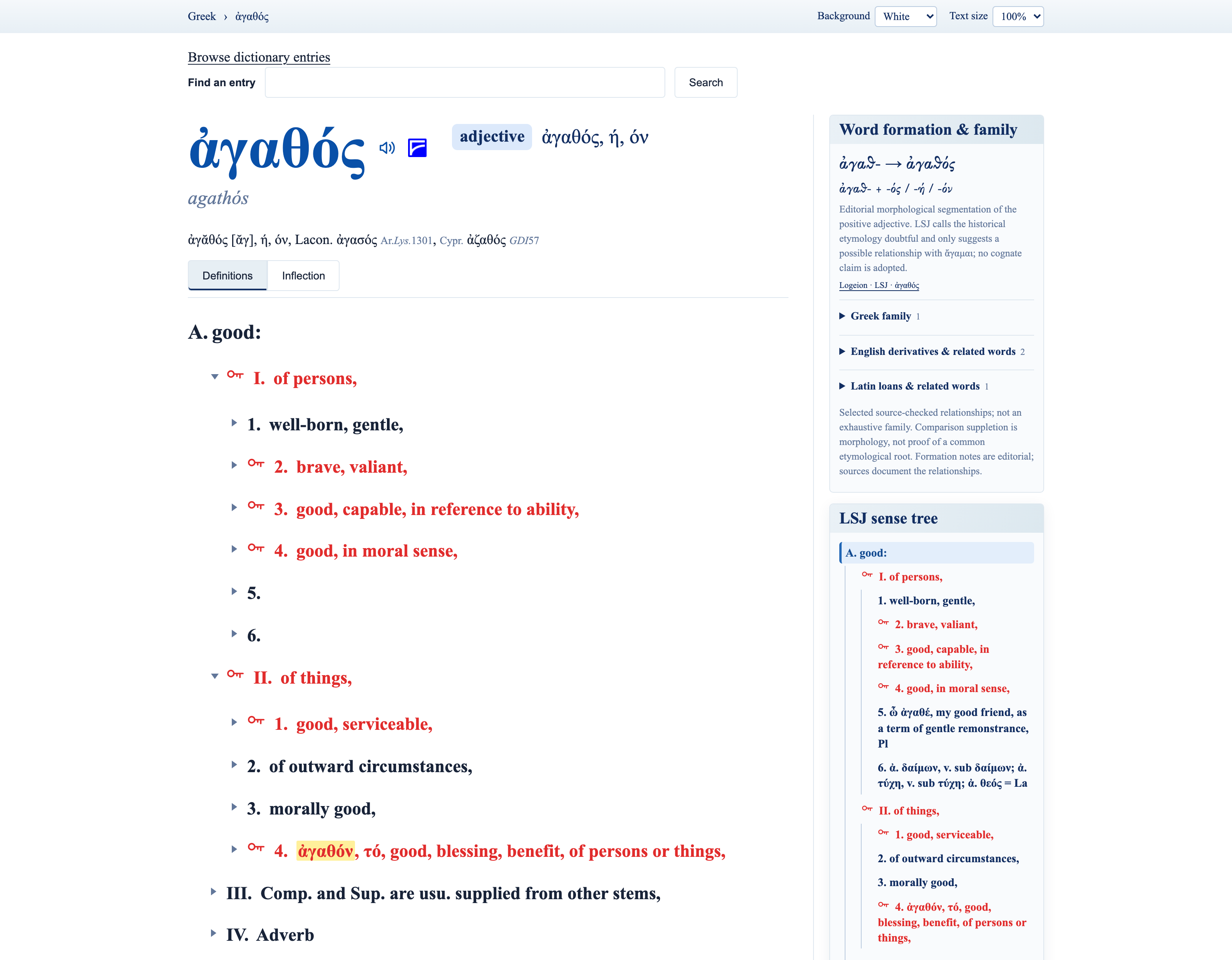 View full resolution
 View full resolution
Captured on 15 October 2026. Learning keys, word-family commentary, and supplementary translations are editorial additions, distinct from the original LSJ material. This entry is a preview, not a completed edition.
03 / Behind the tree
I study classical languages and build software to support careful reading. My work moves between Greek words, the shape of a page, and the practical details of making a tool useful.
STOA and the LSJ reconstruction grow from the same question: how can difficult texts become more approachable without losing their depth?
Linguistic decisions should be open to inspection, correction, and discussion.
AI can help with repetitive work. The reader or editor decides what belongs in the final record.
Useful scholarship should travel beyond one screen, into study materials, reference works, and publications.
Let’s talk
Get in touch about STOA, the LSJ reconstruction, or the practice of close reading.